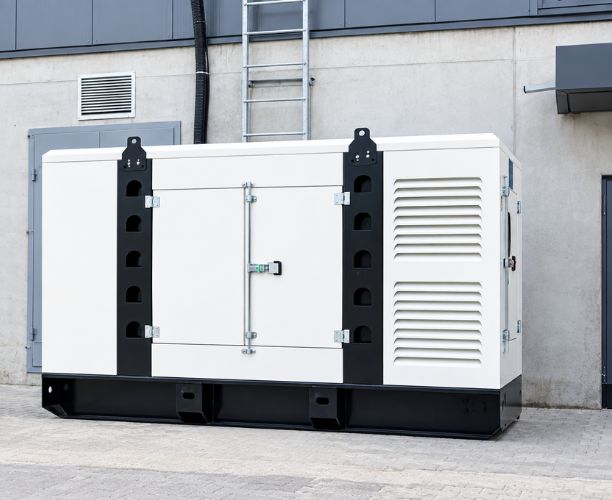
How much generator capacity does a business really need? Choosing a unit based only on a facility’s average electrical consumption can create problems when large motors, HVAC equipment, pumps, compressors, or other equipment starts simultaneously.
Effective capacity planning looks beyond the generator itself. It considers critical loads, starting requirements, fuel, transfer equipment, installation conditions, and future expansion. For businesses evaluating industrial power systems, this approach helps create a backup solution that matches actual operational needs rather than simply selecting the largest available generator.
How Should Businesses Calculate Generator Capacity?
Generator capacity should be based on the electrical loads that must operate during an outage, including both running and starting demands.
A practical planning process includes:
- Identify critical loads: Determine which equipment must remain operational during an outage.
- Calculate running loads: Establish the normal electrical demand of those essential systems.
- Account for starting loads: Motors and compressors can require significantly more power during startup.
- Review voltage and phase: Confirm that the generator matches the facility’s electrical configuration.
How Do Turnkey Generators Differ From Traditional Generators?
A turnkey generator solution is an integrated power system supplied, installed, connected, commissioned, and supported as a coordinated project. A traditional generator purchase may primarily involve supplying the generator set, leaving additional integration work to the customer or separate contractors.
The distinction matters because a generator is only one part of a commercial or industrial backup power system.
Where Do Industrial Power Services Fit Into Capacity Planning?
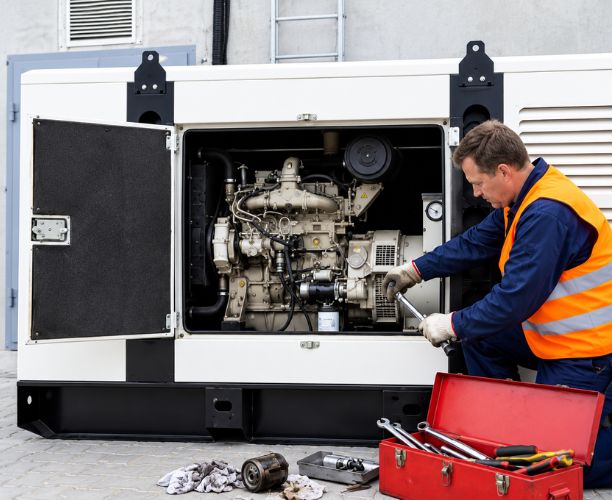
Capacity planning should not end when the generator is installed. The system needs ongoing inspection, maintenance, testing, and repair support to remain ready for an actual outage.
This is particularly important for manufacturing facilities, data centers, commercial buildings, agricultural operations, and other sites where unexpected downtime can disrupt essential activities.
If you’re reviewing generator requirements for a commercial facility, the guide How to Choose a Generator System for a Commercial Building provides additional considerations for load requirements, fuel, transfer equipment, installation, and future expansion.
When Is a Turnkey Approach the Better Choice?
A turnkey approach can be particularly useful when a facility needs multiple systems coordinated under one project.
This may include:
- New commercial construction
- Manufacturing facilities
- Mission-critical operations
- Facilities with complex electrical distribution
- Generator replacements requiring updated integration
- Sites needing generator, fuel, controls, and switchgear coordination
The main advantage is project integration. Instead of treating the generator as an isolated piece of equipment, the industrial power services consider it as a complete backup-power architecture.
Plan Capacity Around the Business, Not Just the Generator
Generator capacity planning works best when the starting point is the facility’s operational requirements. A properly planned system considers critical loads, starting demand, electrical infrastructure, fuel, runtime, installation requirements, and future needs.
For businesses comparing power generation services, the key question is therefore not simply, “How many kilowatts do we need?” It is, “What does our facility need to keep operating safely and reliably when utility power is unavailable?”
For businesses seeking integrated commercial power systems, Lonestar Power Systems can provide turnkey power solutions, installation, maintenance, and emergency support for commercial and industrial operations.
Key Takeaways
- Generator capacity should account for running loads, starting loads, critical equipment, and future expansion.
- Turnkey generator solutions coordinate the generator with ATS equipment, switchgear, controls, installation, and commissioning.
- Fuel, physical installation conditions, maintenance, and testing are important parts of capacity planning.
Frequently Asked Questions
What is generator capacity planning?
Generator capacity planning is the process of determining the generator size and supporting equipment required to operate a facility's essential electrical loads during an outage.
How do turnkey generators differ from traditional generators?
Turnkey solutions coordinate equipment selection, installation, electrical integration, controls, transfer equipment, commissioning, and potentially ongoing service. A traditional generator purchase may focus primarily on supplying the generator itself.
Should a business size a generator based on average electricity use?
Not necessarily. Average consumption does not always reflect starting demand from motors, compressors, HVAC equipment, pumps, and other equipment. Running and starting loads should both be evaluated.