Start with the mission, then the machine
A useful standby-power conversation begins with a business question: what must keep working when utility power fails? A warehouse, public facility, and data center may all need a generator, but the consequences of losing individual loads can be very different. Document the operation you need to preserve before comparing equipment sizes or prices.
Create a short operating brief with facilities, operations, IT, and the people responsible for the site. Describe the services that must continue, the interruptions they can tolerate, and the point at which a controlled shutdown becomes necessary. A shared brief helps keep the project focused when equipment choices, site constraints, and budget decisions arrive.
Build a load list that explains behavior
A list of running kilowatts is only part of the picture. Motors, cooling equipment, variable-frequency drives, and UPS systems introduce different starting and operating characteristics. Cummins identifies load characteristics and the sequence in which loads are applied as important factors in generator response and sizing. Ask your design team to evaluate those characteristics together.
For each priority load, gather the equipment name, available nameplate information, operating schedule, and any known startup sequence. Mark uncertain information clearly. An early estimate can support planning, but it should be revisited as the equipment schedule becomes more complete. Do not turn an assumption into a permanent design requirement simply because it appeared in the first spreadsheet.
Reference: Cummins: Understanding Transient Performance of Generating Sets ↗
Define the transfer and recovery sequence
Ask the project team to describe an outage from detection through recovery. Which equipment starts first? Which systems wait? What happens if a load is unavailable or the utility returns during a transition? Write the intended behavior in plain language so facilities staff and technical designers are working toward the same result.
For a data center, include the UPS and cooling strategy in this discussion. For a public facility, identify which operations must remain available to staff and the community. The final sequence needs engineering review, but the operational priorities should come from the people who understand the building. Request a commissioning plan that demonstrates the agreed sequence under defined test conditions.
Treat the site as part of the power system
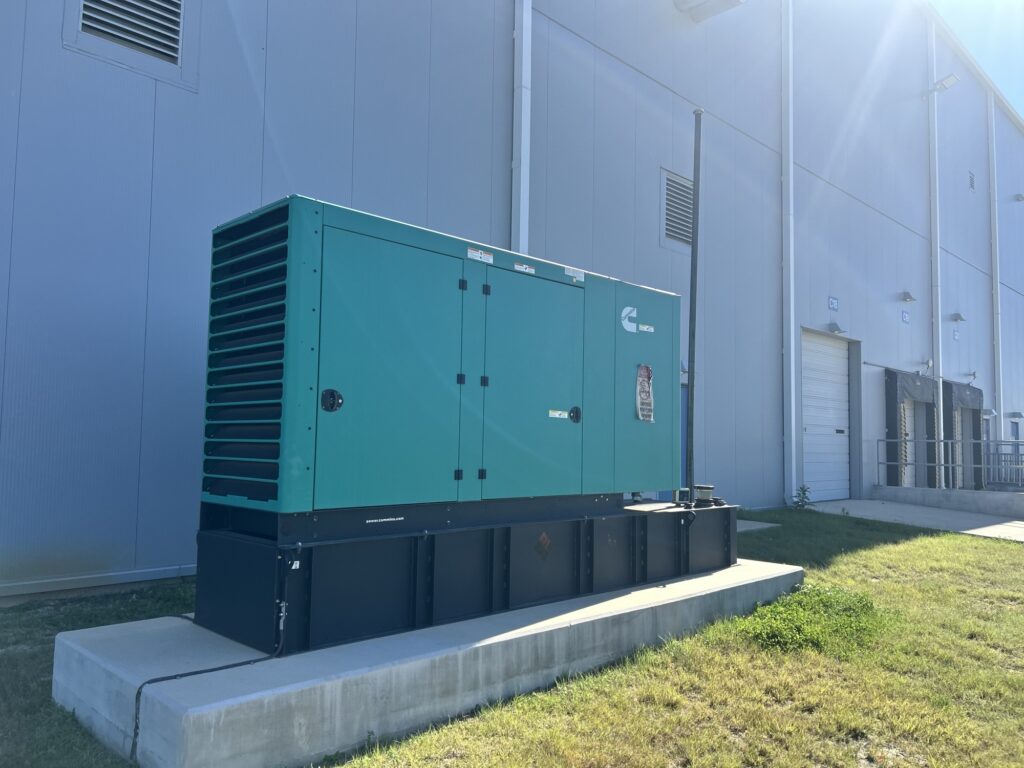
Available space on a site plan is not the same as a workable installation location. Cummins' application guidance highlights maintenance access, major component removal, exposure to flooding, fuel containment, and access for load testing among the location considerations. Bring these questions into the site walk before equipment placement becomes fixed.
Map the proposed generator location alongside delivery routes, service-vehicle access, nearby activities, and future construction. Ask the qualified project team to evaluate ventilation, exhaust routing, noise, electrical clearances, and applicable permitting requirements. Record who will resolve each question and when. This keeps a promising concept from reaching procurement with unresolved installation constraints.
Reference: Cummins: Liquid-Cooled Generator Set Application Manual ↗
Make fuel and support plans specific
Describe the outage scenario your team is planning for and ask how the proposed fuel arrangement supports it. Identify who monitors fuel, who can authorize replenishment, how deliveries reach the equipment, and which contact takes over outside business hours. Keep the assumptions visible; a plan for a brief interruption may differ significantly from a plan for a prolonged regional event.
Request a written service scope alongside the installation proposal. It should identify the equipment covered, maintenance responsibilities, documentation provided, and how corrective work is approved. A contact list, escalation process, and accessible equipment records give your staff something concrete to use when conditions become stressful.
Bring a decision-ready brief to the first meeting
You do not need a finished design to start a productive conversation. Bring enough context for the team to identify the next decisions and the information still missing. A useful first-meeting package includes:
- Facility location, site contact, and the operations that must continue.
- A preliminary critical-load list and any available electrical drawings.
- Existing generator, transfer-switch, UPS, and fuel-system information.
- Space constraints, access restrictions, and planned facility expansion.
- Target schedule, purchasing process, and the people approving the project.
Plan for ownership after startup
Before closing the project, agree on the handover: drawings, equipment identification, manuals, test records, training, and open items. Assign an owner for keeping those records current as the facility changes. The strongest planning outcome is a system your team can understand, maintain, and evaluate against the operation it was selected to support.
Lonestar Power Systems can help you begin that conversation with the facility, equipment, and project priorities in view. Share your location and critical operations when you schedule a consultation.